How Long Do Esports Careers Actually Last? The Numbers
"Esports pros are washed by 25" gets repeated until it sounds like a law of nature. The public record — reaction-time research, roster transaction databases, league age rules, and a few stubborn exceptions — tells a more specific story: which game, which role, and how the industry pays decide career length far more than birthdays do. Every number here comes from a named public source you can check yourself.
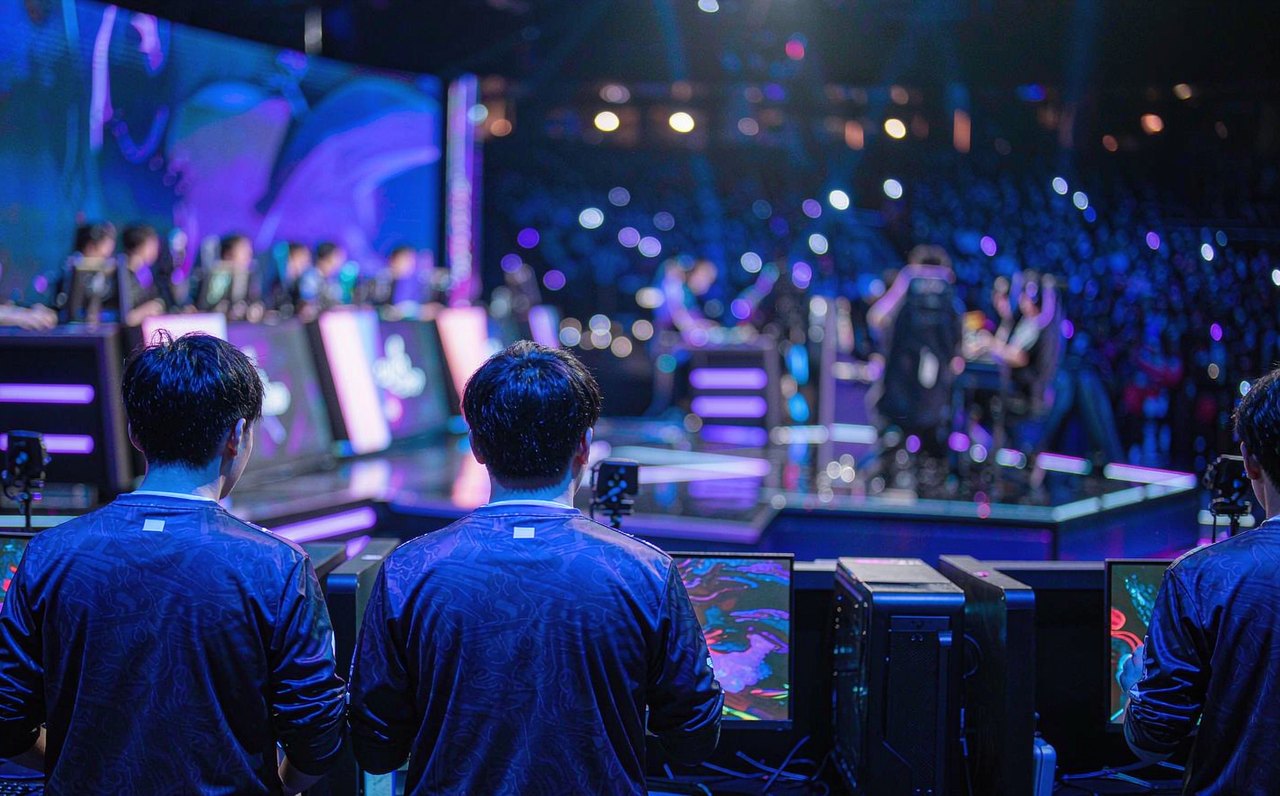
The "over the hill at 25" narrative gets stated like physics, but almost nobody quoting it has looked at the underlying data. The interesting thing is that the data exists in public form — league age rules, transaction logs, audience trackers, and peer-reviewed reaction-time studies — and it supports a more precise conclusion: raw reflex declines only slowly, while the structural forces around a player (talent pipelines, salary cliffs, practice load) do most of the retiring. Here is what each source actually says.
Sources, named up front: viewer numbers come from Esports Charts (escharts.com — note it excludes most Chinese platforms, so true totals are higher); roster ages and moves come from Leaguepedia's public transaction records; age rules come from publisher-published league regulations; the reaction-time figures come from peer-reviewed population studies (Dykiert et al., 2012, published in the journal Intelligence). Numbers move season to season — treat the specific figures as snapshots and check the current ones.
The reflex ceiling is real — and smaller than the myth
Population studies that track simple visual reaction time across thousands of participants find that it peaks in the early-to-mid twenties and then slows gradually — on the order of roughly 2 ms per year through adulthood in the Dykiert et al. dataset. Put that in context: one frame at 60 Hz lasts 16.7 ms; at 240 Hz it is 4.2 ms. A decade of aging adds roughly what one recent monitor generation saved — meaningful at the very top, not a cliff. More importantly, elite play is mostly not raw reaction: practiced mechanics run on anticipation and pattern recognition, which age far better than untrained reflexes. The careers that end young almost never end because the player's nervous system hit a wall.
What the transaction records show
Census-style summaries built from Leaguepedia's public roster transactions consistently describe a League of Legends career that starts around age 17-18 and ends in the mid-twenties, with top-flight spans of roughly 3-5 years. Two structural reasons dominate. First, the pipeline: league minimum ages — 17 in Riot's major Western leagues, 18 in China's LPL since the 2023 season — mean a fresh cohort of the world's best 17-year-olds arrives every single year, and each of them is cheaper and hungrier than a 24-year-old veteran. Second, the load: publicly reported pro practice schedules run 10+ hours a day for most of the year, and burnout — not injury, not decline — is the most cited reason in retirement statements.
The role effect: some jobs age, some do not
Averages hide the most useful pattern. Strategy-heavy roles last dramatically longer. In Counter-Strike, karrigan (born 1990) captained FaZe Clan to the PGL Antwerp Major title in 2022 at age 31 — calling the shots, not chasing them. In League, Faker (born 1996) won the 2024 World Championship at 28, years past the median retirement age, in a league where most of his early rivals are long gone. Fighting games tell the same story from another direction: Tokido (born 1985) kept placing top-8 at EVO events in his late thirties, because those games reward reads and adaptation over twitch. The pattern across titles: in-game leaders, strategists, and fighting-game veterans compete on processing and experience — skills that compound — while entry-fraggers and mechanically-defined roles turn over fastest.
The money cliff nobody averages into the story
Career length is also an economics question. Riot's published minimum salary for North America's top League league has been reported at around $75,000-80,000 per season — but that floor covered only a few dozen starting slots in the entire region, while tier-2 league salaries have been commonly reported an order of magnitude lower, often below what the same hours would earn in a regular job. When the salary curve falls that sharply below the top, most players rationally exit in their early twenties even while still competitive. The audience, for scale: Esports Charts recorded the League of Legends 2024 world final peaking at just under 7 million concurrent viewers on tracked platforms, and CS2 Majors typically peak around 1.5-1.8 million — a large but concentrated market in which only the top tier of teams sits near that salary floor.
What actually ends careers, ranked by the record
- Burnout and practice load — the most cited factor in retirement statements across games.
- The talent pipeline — a cheaper, younger cohort arrives annually by design.
- Wrist and hand injuries — documented repeatedly in team announcements, especially in high-APM titles.
- Org and visa instability — roster contraction and league restructuring end more careers than decline does.
- Raw reflex decline — real, measurable in milliseconds per year, and last on the list.
For anyone considering the path, the numbers suggest the durable moves: gravitate toward roles with longer tails (shot-calling, coaching, analysis), build adjacent skills while the salary covers you, and keep an education running in parallel — the pipeline guarantees the clock is ticking even when the reflexes are not. For viewers, it explains why veteran runs like karrigan's or Faker's carry so much weight: they are not outrunning time, they are playing the parts of the game that time cannot take. The hardware side of pro setups — and which spec claims are worth the money — is covered in the refresh rate comparison, the response time marketing breakdown, and the DPI and polling rate analysis. More analysis pieces sit on the full article list.